
Completion of the Kokuryu Maru and Its First Methanol Bunkering
September 25, 2026
Mitsubishi Gas Chemical Company, Inc.
Kokuka Sangyo Co., Ltd.
Hanshin Diesel Works, Ltd.
Mitsubishi Gas Chemical Company, Inc. (MGC; Head Office: Chiyoda-ku, Tokyo; President: Yoshinori Isahaya), Kokuka Sangyo Co., Ltd. (Kokuka Sangyo; Head Office: Minato-ku, Tokyo; President: Kimifumi Imagawa), and Hanshin Diesel Works, Ltd. (Hanshin Diesel Works; Head Office: Chuo-ku, Kobe; President: Kazuhiko Kinoshita) hereby announce that the chemical tanker Kokuryu Maru (the Vessel; Gross tonnage: 498 tons; Shipyard: Koa Sangyo Co., Ltd.), equipped with a dedicated methanol-fueled main engine ordered by Kokuka Sangyo and manufactured by Hanshin Diesel Works, has been completed, and that the first methanol bunkering (fuel supply)*1 to the Vessel has been carried out.
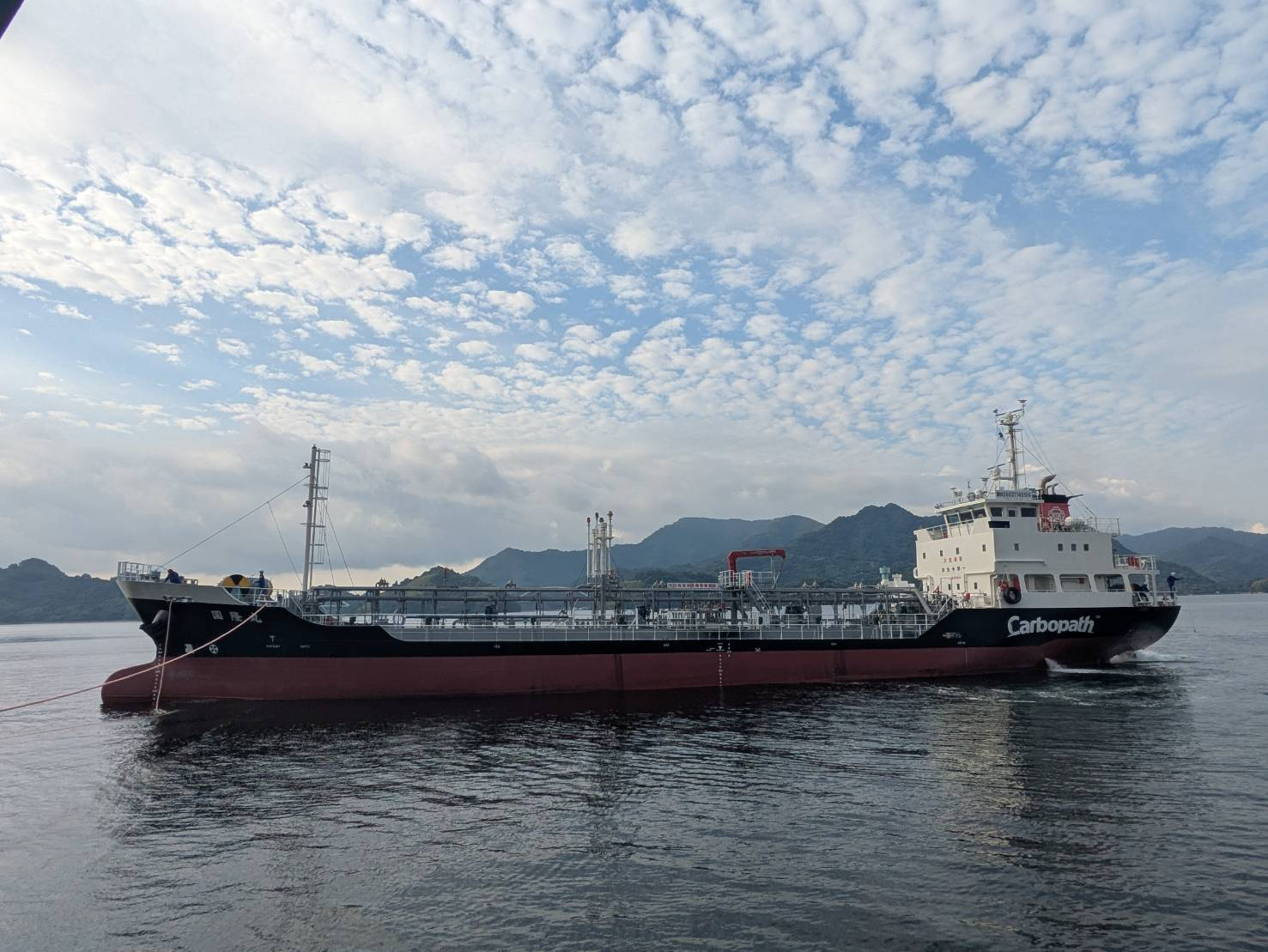
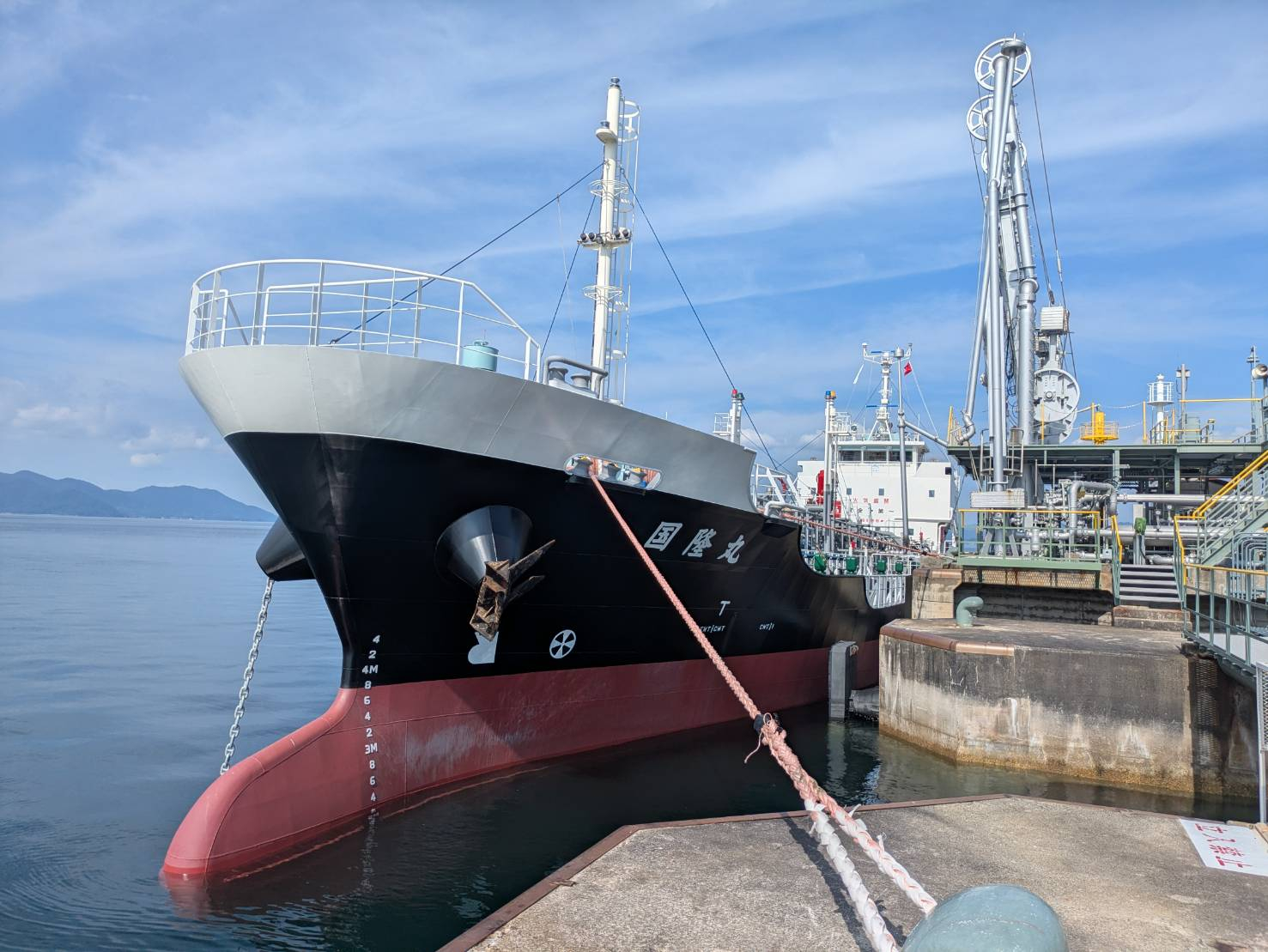
Methanol bunkering to the Vessel (at Kinoe Port)
The Vessel will be chartered by MGC and is expected to primarily transport methanol domestically, while also serving as a methanol bunkering vessel. It is Kokuka Sangyo’s first introduction of a dedicated methanol-fueled vessel.
In the first methanol bunkering conducted at Kinoe Port on September 24, 2026, the fuel supplied included biomethanol *2 produced domestically at MGC’s Niigata Plant. The supplied biomethanol will be used as fuel during operation of the Vessel.
Toward the decarbonization of domestic coastal shipping, Japan’s Ministry of Land, Infrastructure, Transport and Tourism has set targets to reduce CO2 emissions from coastal shipping by approximately 17% by FY2030 and approximately 36% by FY2040, compared with FY2013. Methanol is one of the fuels that is easy to introduce from an operational standpoint because it can be handled as a liquid at ambient temperature and pressure, and it is highly compatible with existing infrastructure. It also contributes to reducing emissions of sulfur oxides (SOX), particulate matter (PM), and nitrogen oxides (NOX) compared with conventional fuels. Against this backdrop, this vessel construction project has been selected for the Ministry of the Environment program publicly solicited in cooperation with the Ministry of Land, Infrastructure, Transport and Tourism: the 2024 Project to Promote Decarbonization in the Maritime Sector (including support for the introduction of LNG and methanol fuel systems, etc.). By using methanol fuel, CO2 emissions are expected to be reduced by approximately 17.5% compared with a vessel fueled by conventional heavy fuel oil.
In addition, the partial supply of biomethanol implemented this time is positioned as a pioneering initiative aimed at accelerating the adoption of low-environmental-impact fuels. Methanol can also be synthesized from CO2, waste plastics, and biomass. MGC is promoting the environmental circulation platform CarbopathTM, which creates materials and energy from methanol produced in this manner, with the aim of realizing a circular society. Kokuka Sangyo is strengthening its initiatives to reduce CO2 emissions in shipping by building a system covering the entire process from methanol transportation to bunkering. Hanshin Diesel Works has long recognized methanol as a clean fuel and has advanced technology development accordingly, achieving early commercialization of methanol engines.
This project represents a major step toward reducing CO2 emissions in coastal shipping through collaboration among the three companies pursuing these pioneering initiatives. Based on the completion of the Vessel and its first bunkering, the three companies will continue, through operation of the Vessel, to work on expanding the adoption of methanol fuel and establishing a supply framework, thereby contributing to the achievement of carbon neutrality in the maritime sector.
Specification of the Vessel;
| Deadweight tonnage | 1,223 tons |
| Gross tonnage | 498 tons |
| Main Engine | Hanshin Diesel Works, Model: LA28MRG |
| Operator | Kokuka Sangyo |
| Charterer | MGC |
*1: The act of supplying fuel for use on board a ship.
*2: Biomass characteristics assigned through the mass balance method.
END
Inquiries
Public Relations Department
Administrative & Personnel Division
MITSUBISHI GAS CHEMICAL COMPANY, INC.
TEL: +81-3-3283-5040
 PDF:225.05KB)